



In 2026, AI is revolutionizing eCommerce marketing by enabling brands to provide highly personalized experiences, optimize conversions, and automate key processes. From personalized product recommendations to dynamic pricing and automated email campaigns, AI is now at the center of modern eCommerce strategies.
eCommerce businesses traditionally relied on basic segmentation, static website content, and manual campaign adjustments. With AI, marketers can leverage massive datasets to understand customer preferences, predict purchase behavior, and deliver tailored shopping experiences in real-time.
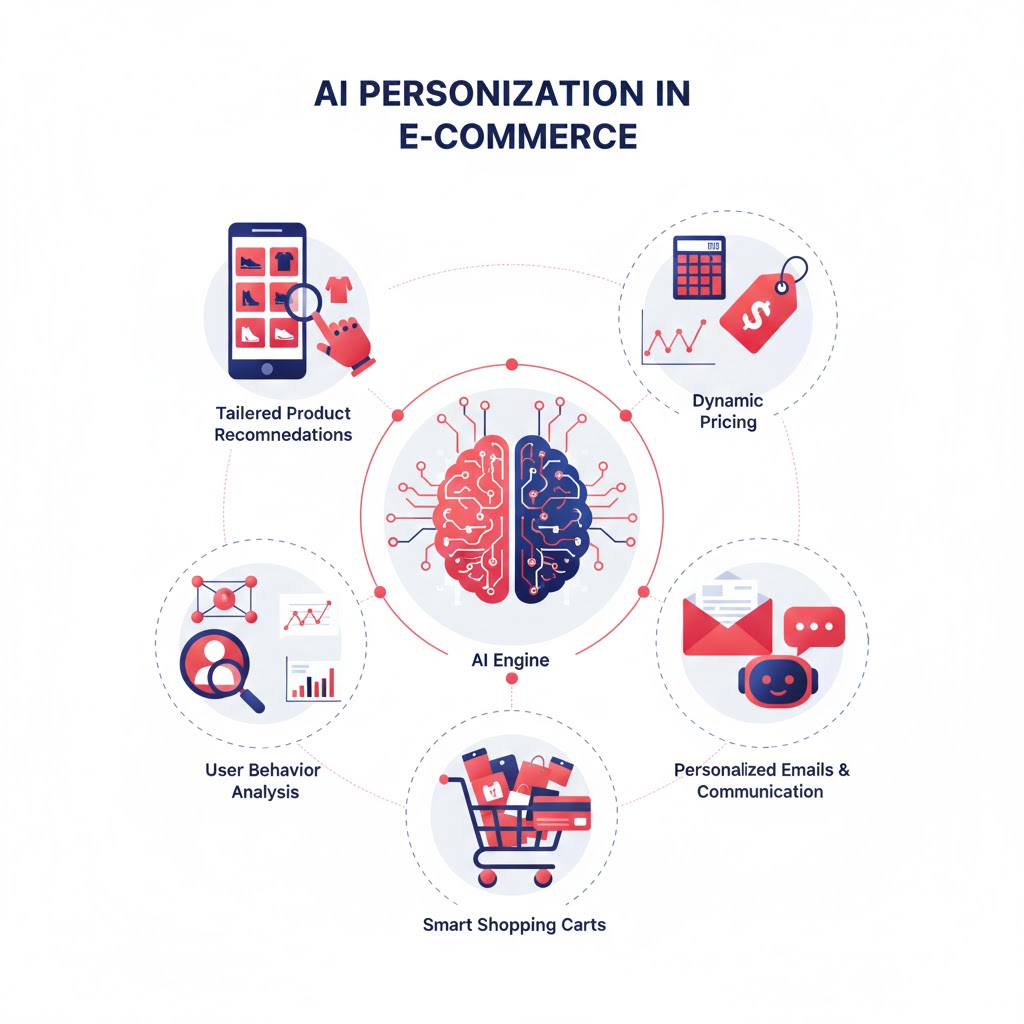
AI-Powered Personalization in eCommerce Personalization is one of the strongest levers for increasing conversions and customer loyalty.
- AI algorithms analyze browsing history, purchase behavior, and demographics to recommend the right products to each user.
- Personalized landing pages dynamically change based on the visitor’s interests and past interactions.
- AI can create individual customer journeys, sending personalized email campaigns, push notifications, and in-app messages.
Product Recommendations and Upselling AI-driven recommendation engines are now standard in eCommerce.
- Personalized recommendations appear on homepages, product pages, and checkout to boost order value.
- AI can predict complementary products, enabling automated upselling and cross-selling.
- Recommendations improve retention by suggesting products users are most likely to enjoy based on behavior patterns.
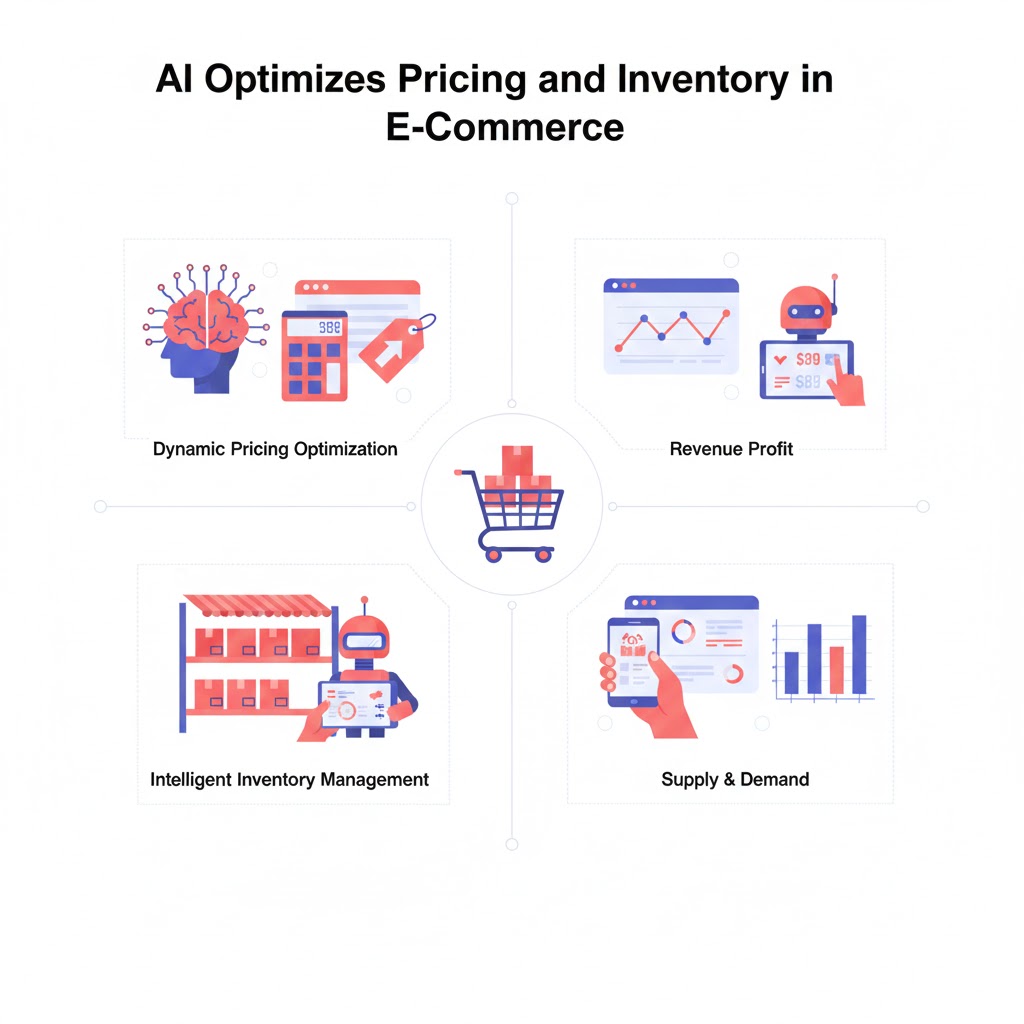
Dynamic Pricing and Inventory Optimization AI enables data-driven pricing and inventory management.
- AI models analyze competitor prices, demand trends, and purchase patterns to automatically adjust prices.
- Inventory can be optimized by predicting stock needs and automating restocking decisions.
Customer Segmentation and Retargeting AI refines segmentation to micro-level groups.
- Customers can be segmented based on purchase frequency, average order value, browsing patterns, and lifecycle stage.
- AI-powered retargeting campaigns automatically adjust creatives and messaging for each segment.
- Predictive models identify potential churn and trigger retention strategies such as exclusive discounts or personalized offers.
Automated Marketing and Chatbots AI automates repetitive marketing tasks, freeing teams for strategy and creative work.
- Chatbots handle 24/7 customer service, FAQ responses, and order tracking.
- Automated email campaigns are triggered by user actions, abandoned carts, or important lifecycle events.
- Push notifications and in-app messages are personalized using AI to maximize engagement.
Predictive Analytics for eCommerce AI predicts future purchase behavior and trends.
- Forecast sales for specific products or categories.
- Identify high-value customers and focus retention efforts accordingly.
- Detect potential supply chain or stock issues before they impact customer experience.
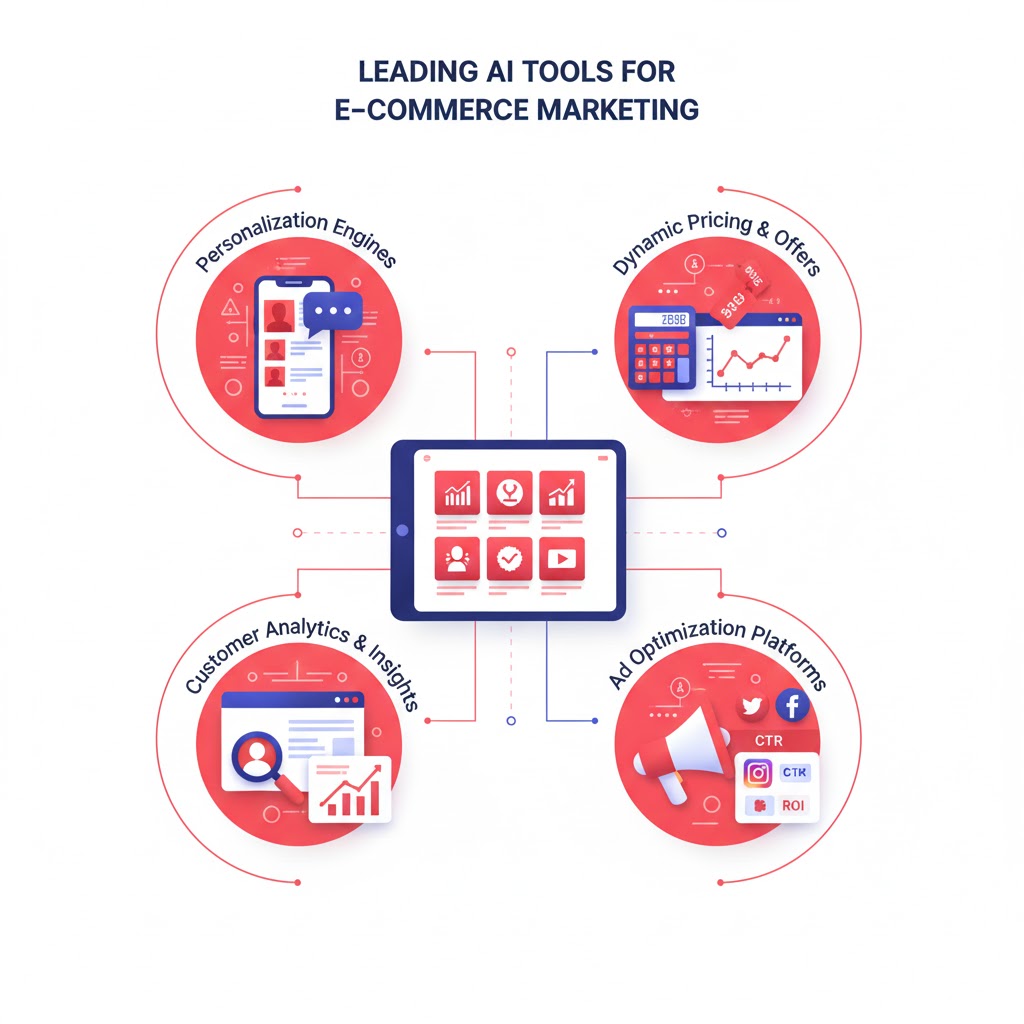
Real-World AI Tools for eCommerce
- Shopify AI & Kit: Offers AI-driven marketing recommendations and workflow automation.
- Dynamic Yield: Personalization and recommendations at scale for eCommerce websites.
- Algolia: AI search and product discovery for smarter user experiences.
- Bloomreach: AI-powered merchandising, search, and personalization.
Step-by-Step Implementation for AI in eCommerce
- Audit existing eCommerce data – Review customer behavior, product performance, and current marketing tactics.
- Select AI tools – Choose platforms for personalization, recommendations, analytics, and automation.
- Integrate with eCommerce platform – Connect AI tools to your website, CRM, and email automation systems.
- Train marketing teams – Ensure teams understand AI dashboards, insights, and recommended actions.
- Launch pilot campaigns – Test AI-driven recommendations, personalization, and automation on a subset of users.
- Measure, learn, iterate – Monitor AI performance, optimize strategies, and expand successful campaigns.
Future Trends in AI eCommerce Marketing
- Hyper-personalization for every visitor using AI predictions.
- AI-driven visual and voice search for product discovery.
- Intelligent inventory and supply chain optimization powered by AI.
- Predictive customer service using AI to proactively solve issues.
- Integration of AR/VR experiences to showcase products in immersive ways.